A customer walks in during peak season, picks a piece, and is ready to pay. What happens next decides whether that sale closes in two minutes or turns into a ten minute wait while a staff member keys in the day's gold rate by hand, calculates making charges on a calculator, and cross checks a scheme discount nobody is quite sure applies. This is the exact moment good jewellery billing software earns its price, and a lot of software sold under that name still cannot handle it.
Why jewellery billing cannot run on generic POS software
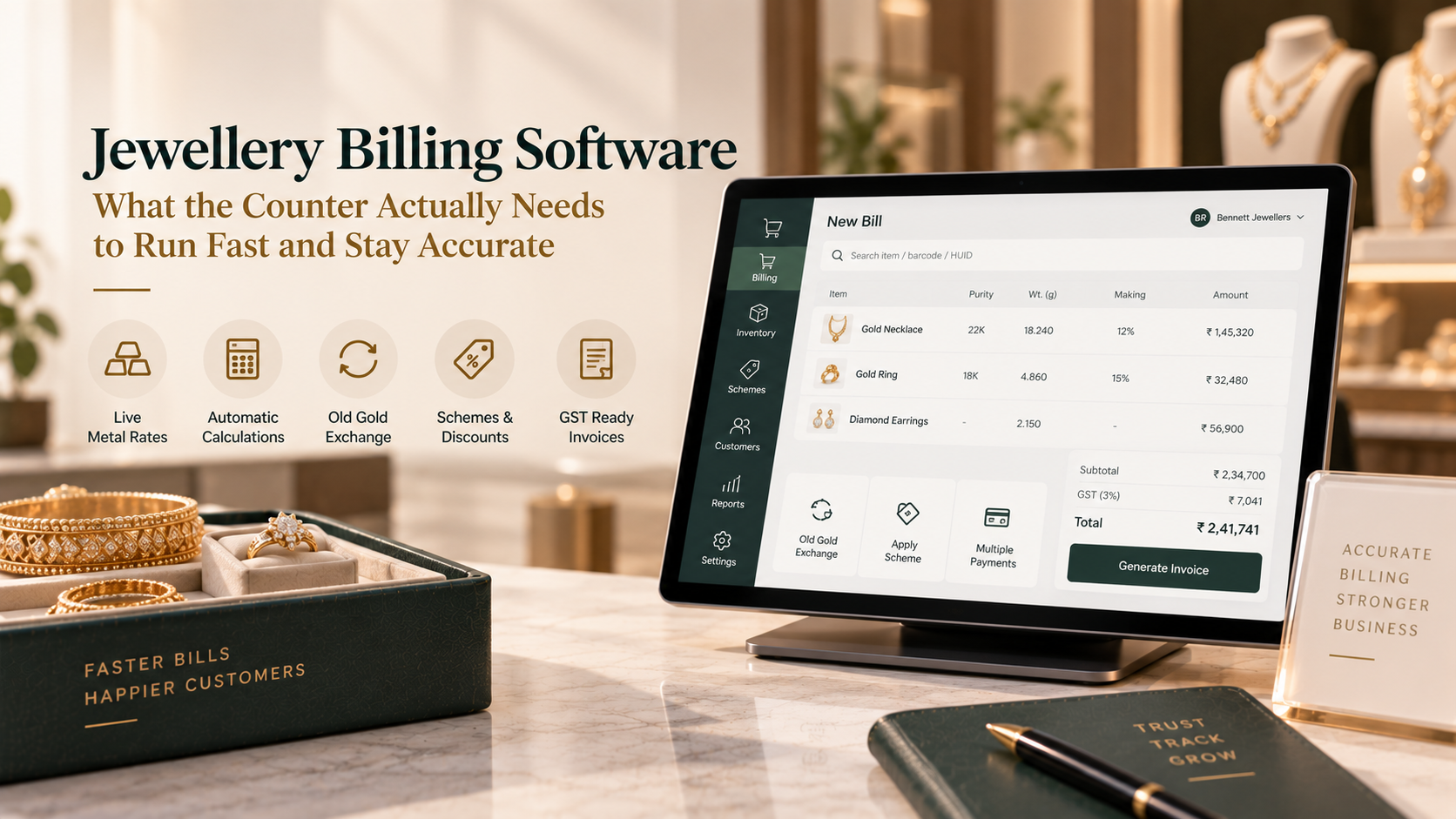
A standard retail POS system assumes a fixed price per item. A jewellery shop bill is never that simple. Pricing changes with the day's gold or silver rate, varies by purity, and combines metal value with making charges, wastage, and sometimes stone value inside a single invoice. Add old gold exchange, scheme discounts, and GST split across metal, making and stone, and a generic POS system runs out of road fast. Billing built specifically for jewellery has to treat all of this as one connected calculation, not a series of manual adjustments stacked on top of a basic checkout screen.
What actually slows down every jewellery shop bill
Four problems show up again and again in showrooms still running on older or generic systems.
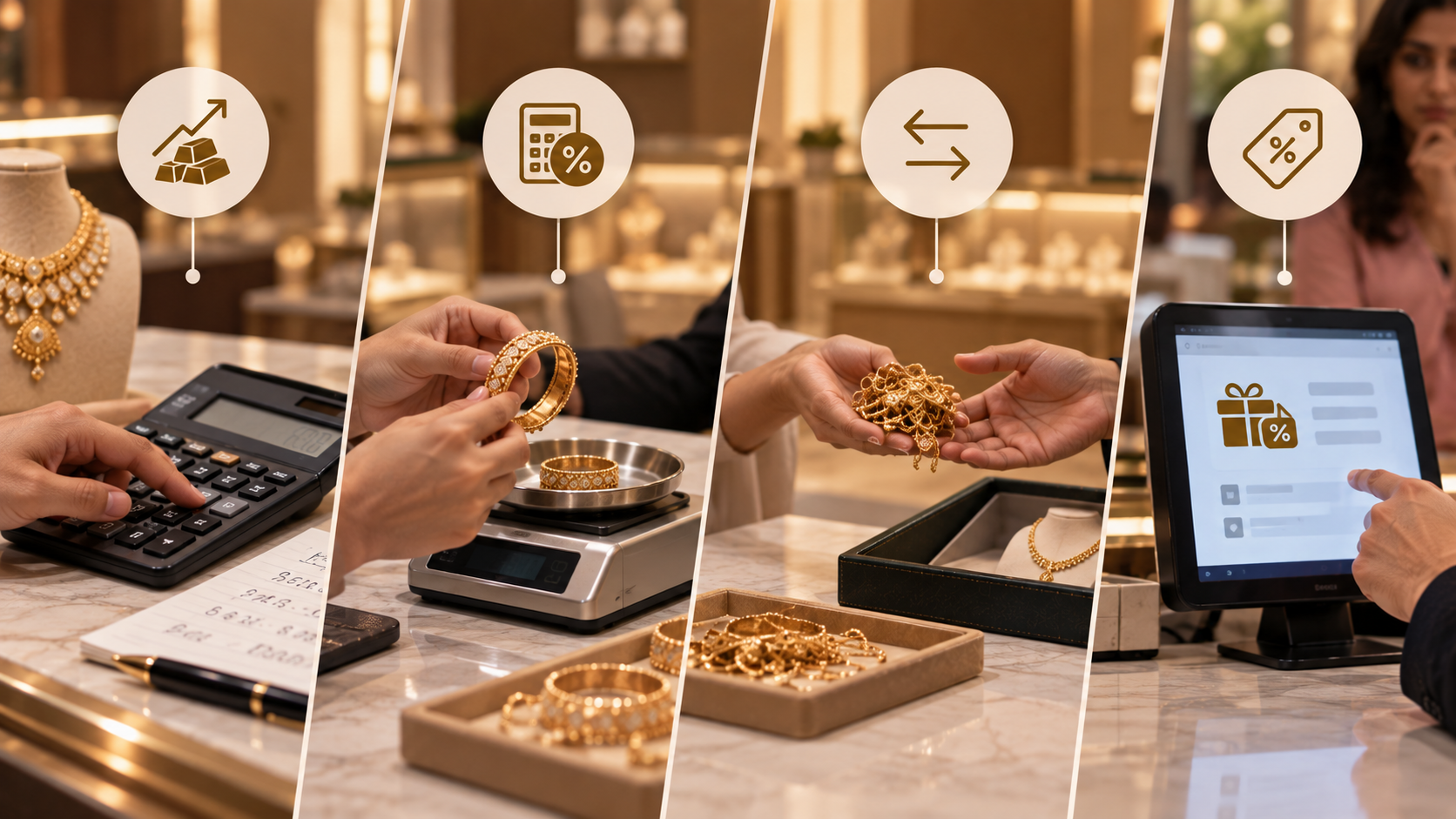
1. Manual gold rate entry at every transaction
If the rate has to be typed in fresh at every transaction, every bill carries the risk of a typo, and the moment the rate changes mid shift, someone has to remember to update it everywhere it is used, across every counter and every branch. This single step is where most gold rate billing delays actually start.
2. Making charge (by per gram, percent, or per piece) and wastage calculated by hand
These vary by design, by karigar, and sometimes by customer category, and doing that math manually at the counter, under pressure, with a queue building behind the customer, is exactly where billing errors creep in. Our breakdown of how making charges are actually calculated covers why two shops rarely quote the same number for the same design.
3. Old gold exchange handled as a separate step
When exchange value has to be calculated outside the main bill and then manually adjusted, metal and amounts, into it, that is extra time and one more place for the numbers to stop matching.
4. Discounts and schemes applied inconsistently
Without a system enforcing scheme rules automatically, discretion at the counter means two customers with identical scheme eligibility can walk out with different pricing, and nobody notices until a complaint lands. The same inconsistency shows up in gold scheme tracking when it is not built into the billing system.
What real jewellery billing software needs to do
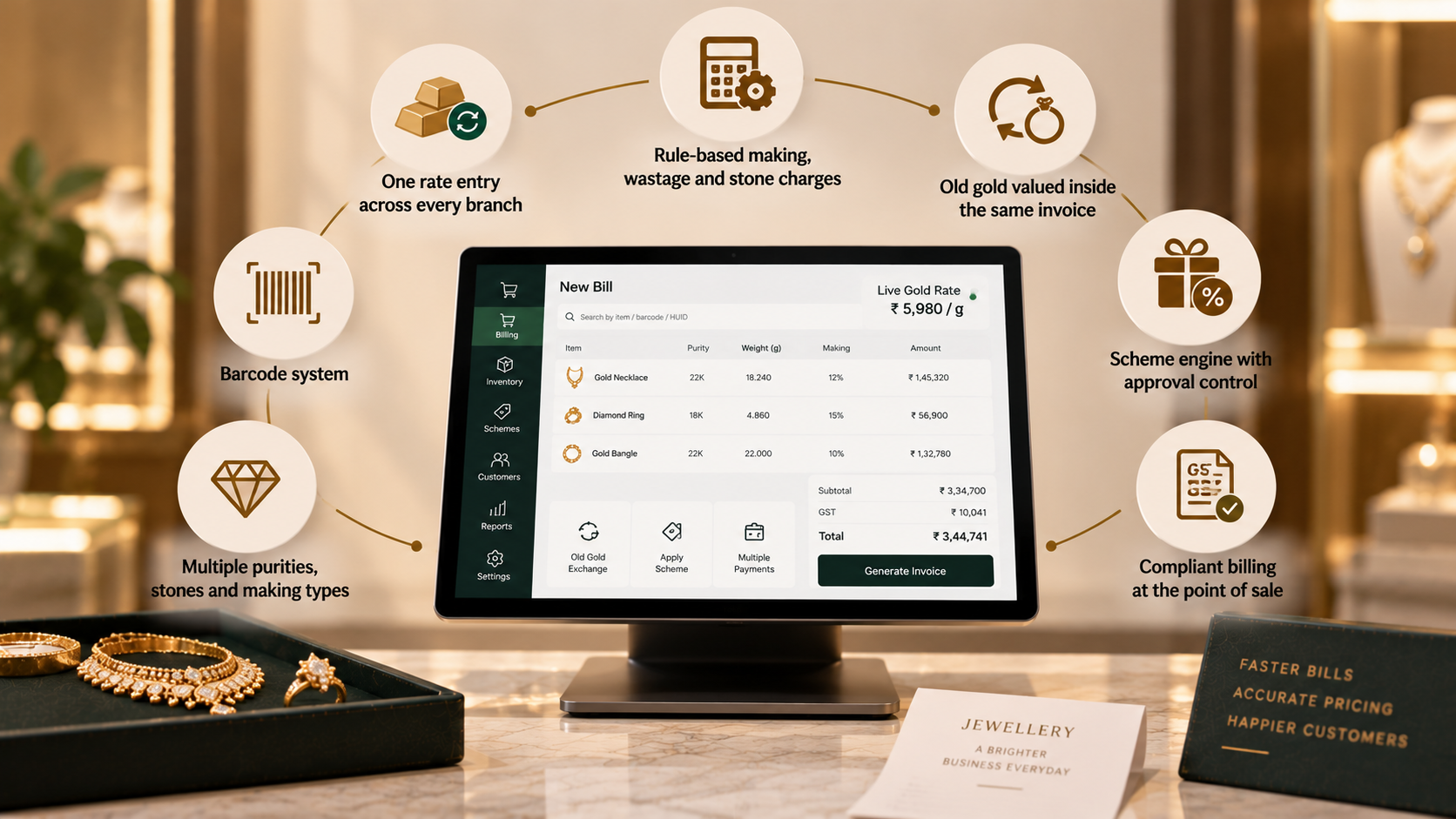
1. One rate entry across every branch and counter
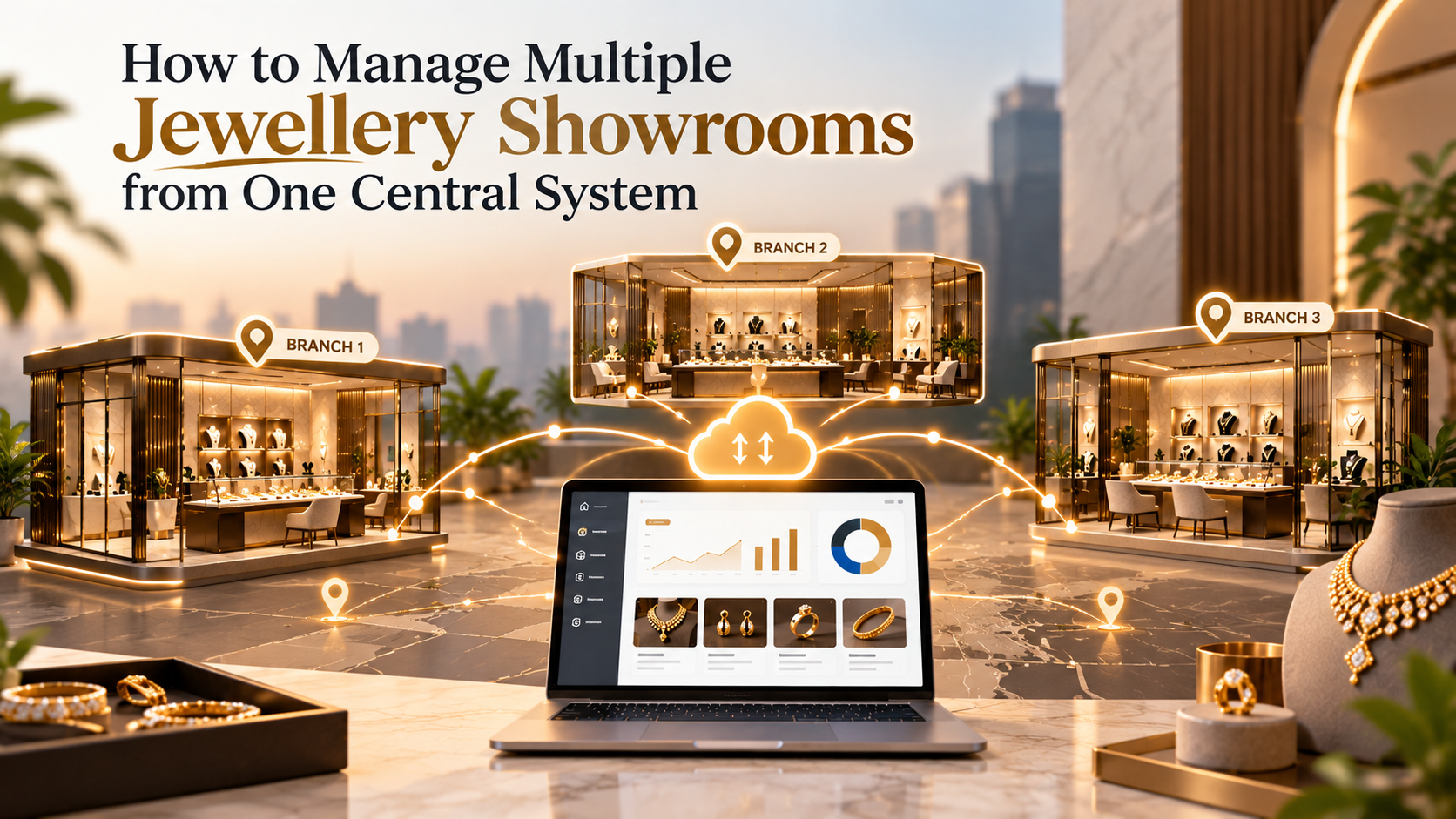
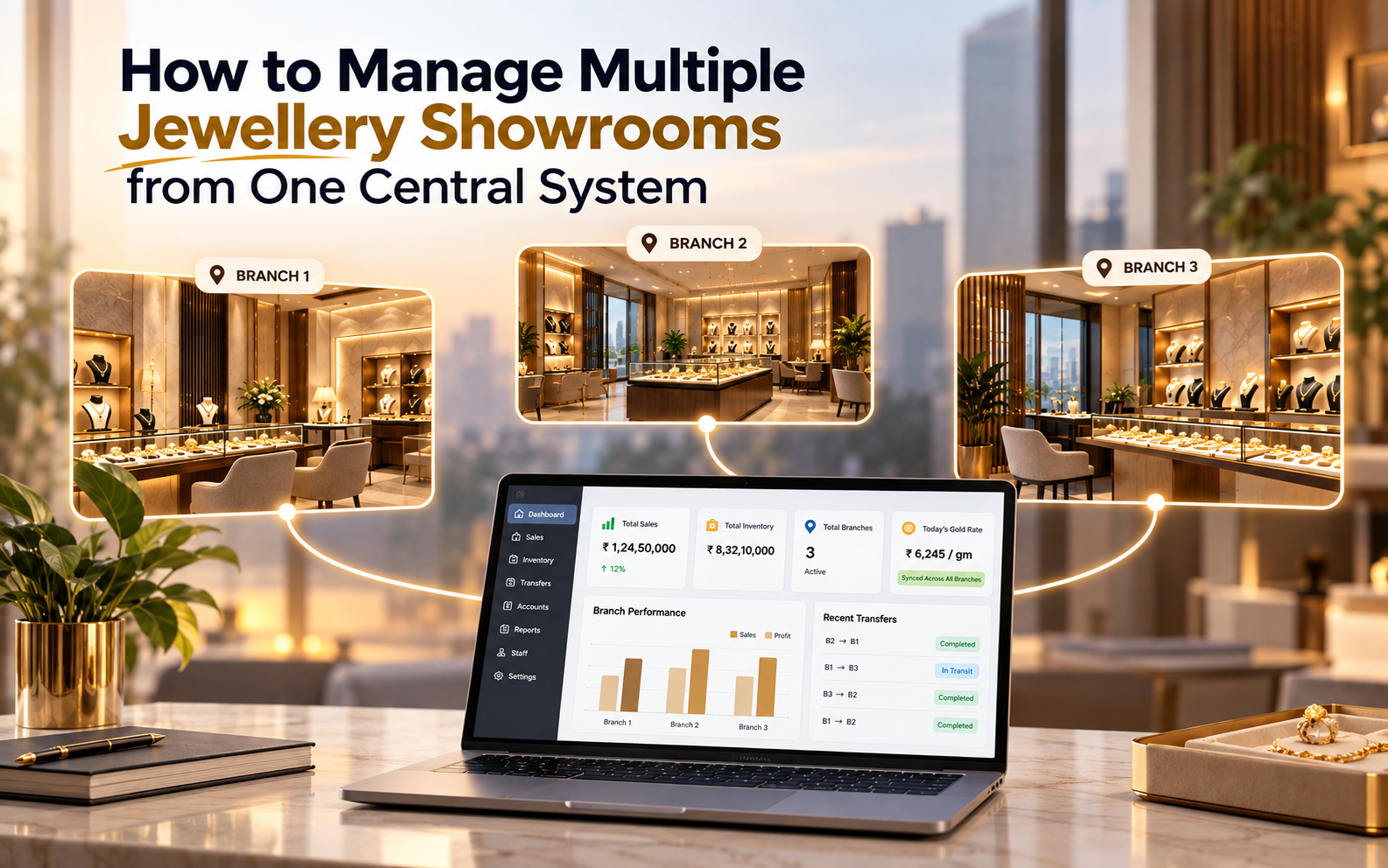
A rate update made once at head office should be live everywhere within seconds, with no manual sync step anywhere in the chain. That only holds up when the software behind it is built for running multiple showrooms from one central system rather than treating each branch as its own island.
2. Rule based making, wastage and stone charges
These should calculate automatically based on rules set once, not recalculated by hand on every jewellery shop bill.
3. Old gold valued inside the same invoice
Exchange value should net against the new purchase in one document, never a separate off book adjustment reconciled later.
4. Scheme engine with built in approval control
Rate lock and rate cut rules should apply automatically at billing, with a configurable approval chain kicking in only when a discount goes above a set threshold, so staff are not making pricing judgment calls under pressure.
5. Compliant billing at the point of sale
Every invoice should generate GST correctly split across metal, making and stone, with a signed IRN and QR code produced the moment the bill is created, not reconstructed later for filing.
6. Barcode based tracking across purity, stones and certification
The same billing screen also needs to carry:
- Single and multi purity metals with their daily rates
- Stone and diamond rates, weights, and diamond certificates
- Making types
- HUID details
- Kundan jewellery and chalni details
Jewellery billing software versus a generic jewellery POS system
Plenty of vendors market a jewellery POS system that is really a general retail POS with a gold rate field added. The tell is what happens outside the happy path: split payments across multiple modes, an old gold exchange mid transaction, a scheme discount that needs approval, or a rate change between two bills at the same counter. Purpose built jewellery billing software handles all of that inside one screen. A retrofitted POS system usually needs a workaround, a second screen, or a manual note for at least one of them.
What to check before choosing jewellery billing software
- Does a single rate update reach every branch and counter instantly, or does someone update each one by hand
- Are making, wastage and stone charges calculated by rule, or does a staff member work them out manually
- Is old gold exchange built into the invoice itself, or handled as a separate adjustment
- Does the scheme engine apply automatically, with approval controls for exceptions, or does discounting depend on who is at the counter that day
- Does the system generate a compliant, signed invoice at the point of sale, or does compliance happen later as a separate step
- Does it support the payment modes your customers actually use, cash, debit or credit card swipe and commission, UPI, and old gold, inside one bill
If billing still means several manual steps stitched together at the counter, the software is handling part of the transaction, not the whole of it.
Frequently asked questions
What is jewellery billing software?
Jewellery billing software is a point of sale system built specifically for jewellery retail. It calculates pricing based on live metal rates, purity, making charges and wastage, and generates a compliant, GST ready invoice, unlike generic POS software that assumes a fixed price per item.
How is jewellery billing software different from a general ERP?
Billing is one module inside a full jewellery ERP. Billing software focused purely on invoicing may not include inventory, manufacturing, or accounting. A complete ERP for jewellery connects billing to stock, karigar management and compliance on the same ledger, so nothing needs reconciling later. See our guide to jewellery accounting software for how that side of the ledger works.
Does jewellery billing software handle old gold exchange?
Good jewellery billing software values old gold exchange inside the same invoice as the new purchase, rather than treating it as a separate manual adjustment.
Can jewellery billing software work across multiple branches?
Yes, when built for it. A single gold rate update should reach every branch and every counter instantly, and invoice formats should stay consistent across locations without manual template changes.
How JewelBiz handles billing end to end
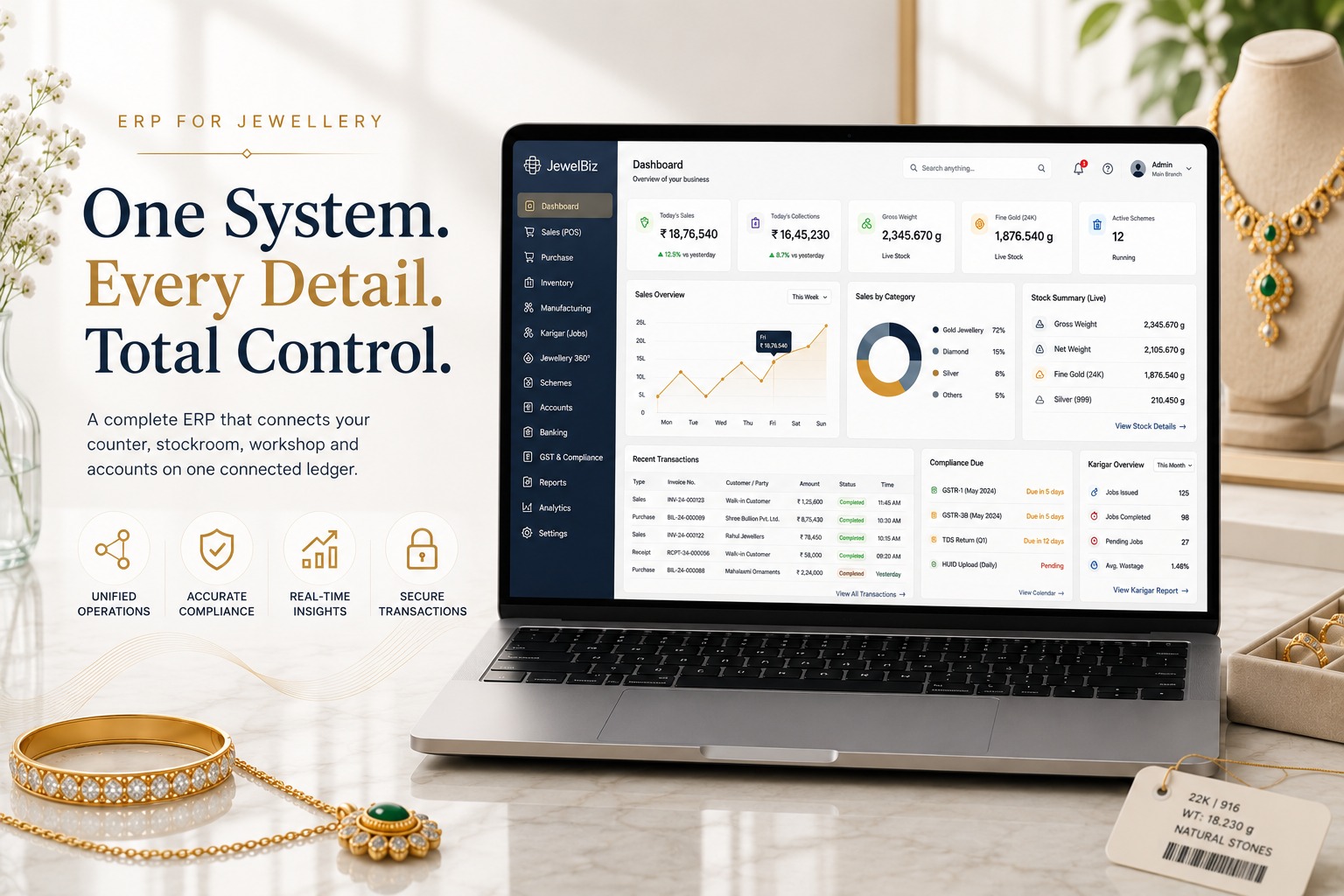
JewelBiz was built around the counter as it actually works during peak season. One rate entry pushes to every branch and POS instantly, and the scheme engine applies rate lock and rate cut rules automatically at the moment of billing. A rule based engine calculates making, wastage and stone charges without a staff member reaching for a calculator. Old gold exchange nets directly against the new purchase inside the same invoice. Discounts and loyalty points apply automatically through the scheme engine, with a configurable approval chain for anything above threshold, so pricing stays consistent no matter who is on the counter. Every bill carries a signed IRN and QR code the moment it is generated, with the e-way bill triggered on dispatch. Barcode scanning and one tap payment across 15 payment modes mean gold rate billing and checkout, from item pickup to printed bill, take a fraction of the time a manual process needs.
Billing accuracy only holds up if the stock data behind it is accurate too. Read our guide to jewellery inventory management for how JewelBiz keeps stock and billing on the same live ledger.
What jewellery software really changed for other showrooms
Jewellers running JewelBiz report saving two to three hours a day that used to go into manual rate entry and reconciliation at the counter, time that goes straight back into serving customers during peak footfall. Several showrooms are currently running their full billing and stock operation on JewelBiz, moving off the same manual, multi step billing process described above.
If billing is still the slowest part of the customer experience in your showroom, it is worth seeing how much of that time is recoverable. Visit the JewelBiz product page or book a demo on your own stock and rate structure and time the difference yourself.